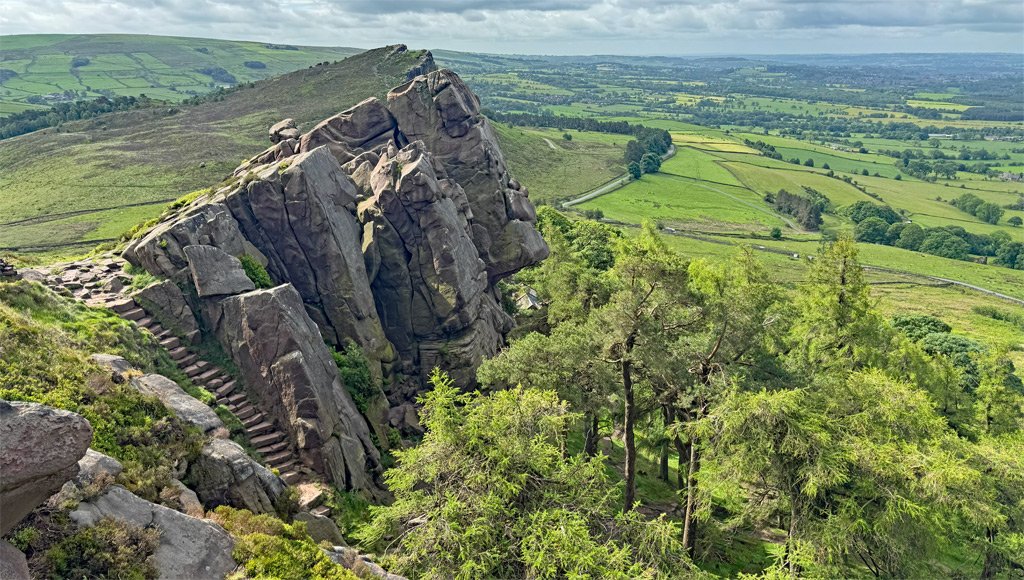
The greatest concentration of celebrated gritstone edges in the Peak District lies along the eastern fringe of the national park, where bold escarpments rise to confine the moorland stretching west from Sheffield. Stanage, Froggatt and Curbar edges are among the most revered names in British climbing.
Far to the southwest, in the Staffordshire Moorlands, the Roaches forms a similarly rugged gritstone escarpment. Unlike its eastern counterparts, however, it does more than define the edge of open moorland; it creates a distinctive ridgeline in its own right.
Among climbers, the Roaches enjoys a reputation equal to any Peak District crag. For walkers, it offers an additional attraction: the ridge above the rocks imparts a genuine sense of being on a hill, rather than simply standing on the margin of a moor.
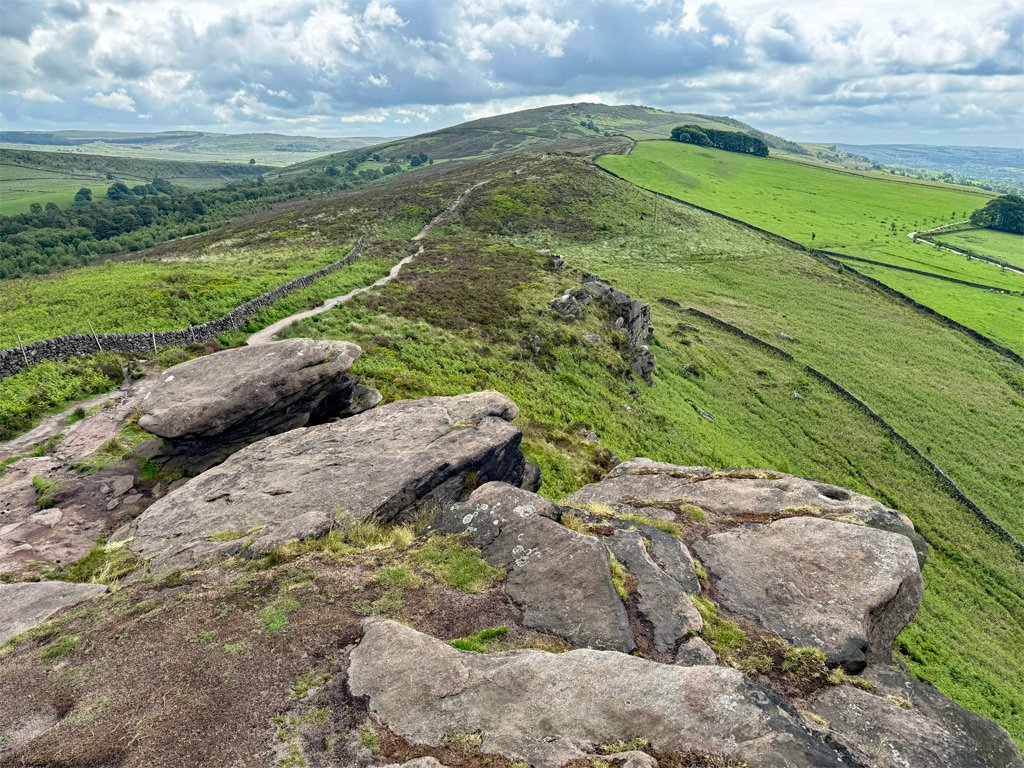
The main ridge is flanked by Hen Cloud to the south, a sister outcrop of exposed gritstone, and by Back Forest Ridge to the north, a lower and gentler continuation that terminates with the dramatic beak-like projection of Hanging Stone.
The traverse of the entire ridge covers around five easy miles and makes a short day out for those able to leave a car at either end. Most visitors, however, will park at one terminus—usually beneath the Roaches—and devise a circular walk of eight or nine miles. That is the route described here, although the emphasis will remain firmly on the main ridge itself.
For those undertaking a one-way traverse, I would recommend starting at Danebridge in the northwest. In this direction, both the drama and the apparent altitude build steadily as the walk progresses. As most people will opt for a circular route, however, our description follows that pattern.
The map below can be moved around and the scale changed by zooming in or out
We set out from one of the several laybys lining the road beneath the Roaches and Hen Cloud. The latter can be climbed directly from the col above as a simple out-and-back excursion, but for the full experience it is worth following the track towards Roaches Hall. A path ascends to the far end of the crags before reaching the hall, while the more curious may prefer to continue past the house—along a public footpath through the car park—and climb through the woods instead.
Roaches Hall plays an intriguing role in the history of the area. Built in 1876 as a hunting lodge, probably for grouse shooting, it formed part of the Roaches estate owned by the Brocklehurst family of Swythamley Hall, a house that will be encountered later at the other end of the ridge.
In 1936 the hall became the site of a private zoo established by Courtney Brocklehurst, brother of Philip Brocklehurst, then owner of the estate. The collection was assembled from surplus animals obtained from Whipsnade Zoo and included yaks, antelope, llamas, emus and wallabies.
Courtney Brocklehurst was killed in action in 1942, after which the animals were either permitted or encouraged to escape. Most survived only briefly in the wild, but the red-necked Tasmanian wallabies proved remarkably resilient. From an original handful, the population had grown to more than fifty within a decade. Sadly, they too appear to have vanished; the last confirmed sighting was in 2009. The hall itself has survived more comfortably and now operates as a self-catering venue capable of accommodating up to thirty guests.
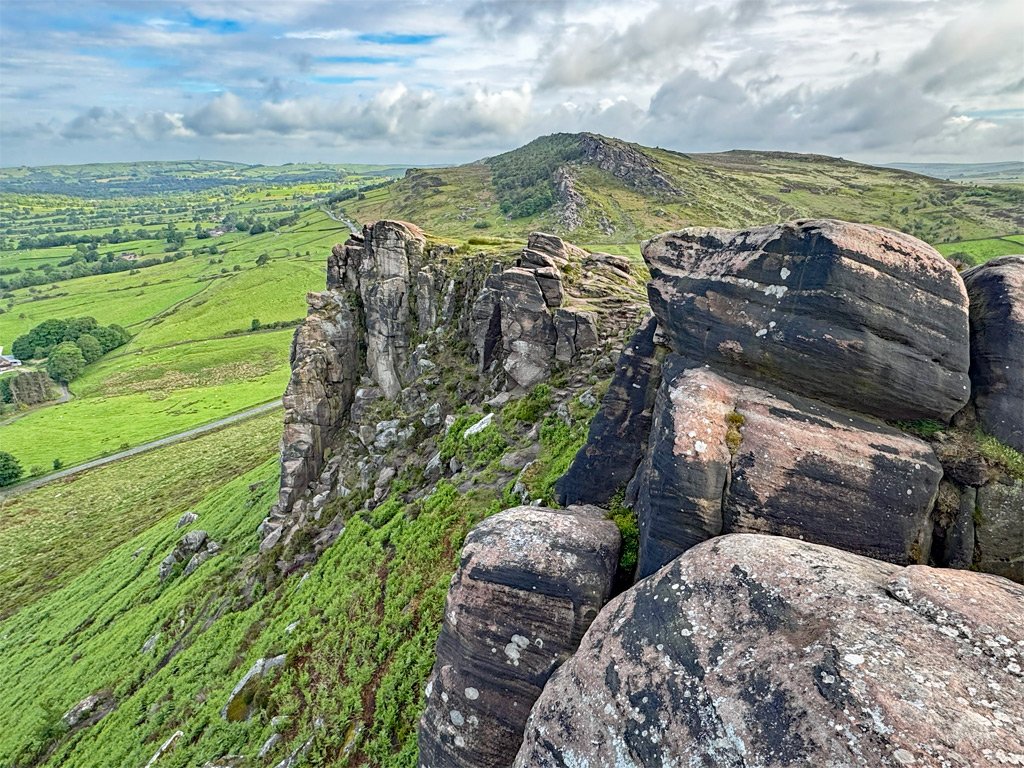
Hen Cloud is also one of the Peak District’s 95 Ethels, a collection of summits—mostly above 400 metres—designated in 2021 in honour of Ethel Haythornthwaite, one of the region’s most influential environmental campaigners.
The Roaches is also an Ethel, a distinction that helps confer the status of a hill rather than merely another gritstone edge.
One of the most striking features of these crags is the array of fantastical shapes sculpted by centuries of weathering. Nearby Ramshaw Rocks may be the finest example of this phenomenon, but there are also fascinating rock formations to admire throughout our walk.
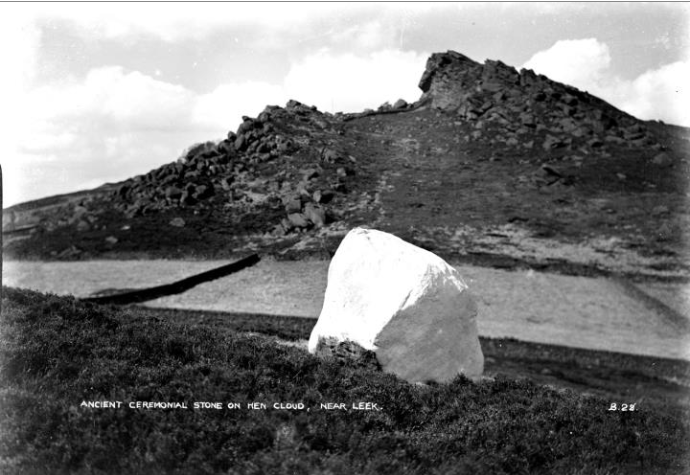
The image above right is by William Blake from 1915, exhibited here from the archives of Staffordshire County Council: https://www.search.staffspasttrack.org.uk/Details.aspx?&ResourceID=12047
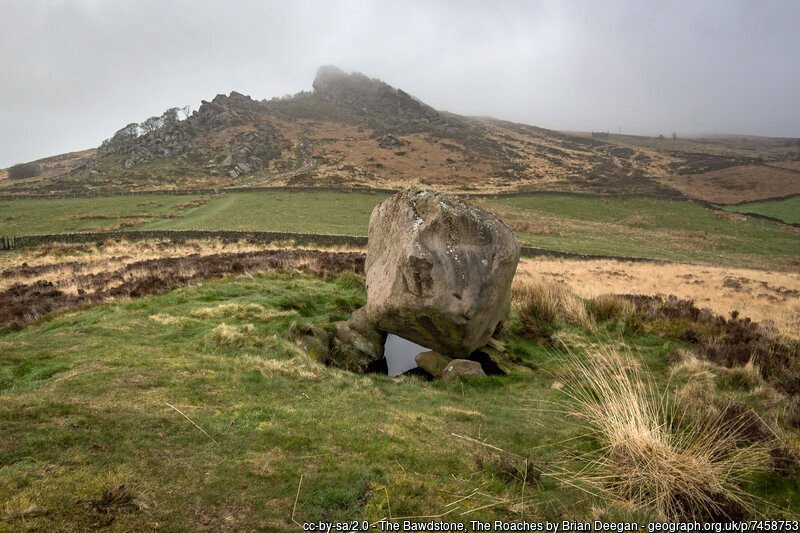
The ridge is also strewn with large, isolated boulders. One such example is the Bawd Stone, which lies to the north of the path as we descend from Hen Cloud towards the Roaches. The entire area bears evidence of prehistoric occupation and this giant boulder may have played a significant role, being precariously balanced upon smaller stones, as though deliberately placed. Unsurprisingly, folklore soon attached itself to the site and the Bawd Stone became reputed as a healing stone, attracting those seeking cures for various ailments. Considering it unholy, and in an effort to purify it, a local family took it upon themselves to whitewash the boulder each year, a practice that continued until 1920.
There are several ways to gain the summit ridge of the Roaches from the intervening col. The crags can be examined in detail, or avoided entirely by keeping to the back slopes. For those undertaking a circular walk, I would suggest following the path up between the crags, before scrambling up to the right-hand side of the upper tier. Although this may appear intimidating, it is a straightforward scramble and there are even a few steps cut into the rock to assist progress. Taking this route leaves the lower rocks to be explored later, providing an enjoyable finale to the return leg.
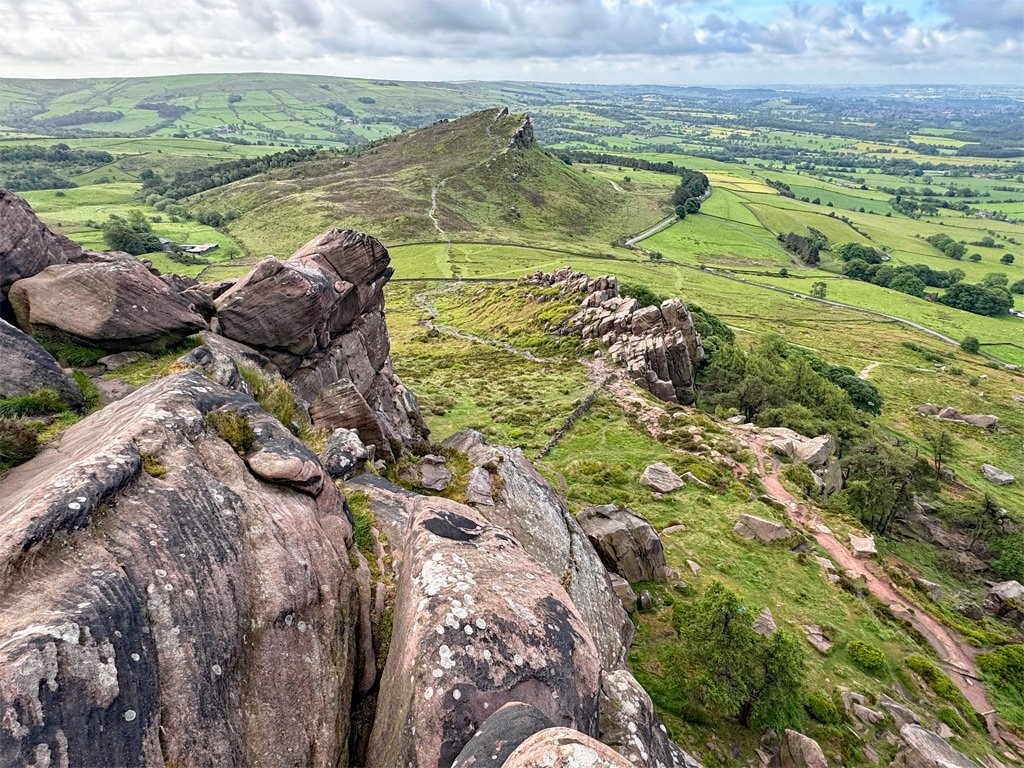
The lower and upper tiers are connected by stone steps that ascend the northern end of the lower crag. Similarly, the top of the upper tier can be reached by a path climbing a gully at its northern extremity. I would recommend using these routes on the return journey, largely because the scramble line is much easier to locate when ascending than when descending.
Before continuing along the ridge, however, let us first explore the crags themselves and some of their more curious features, regardless of when you choose to visit them during your walk.
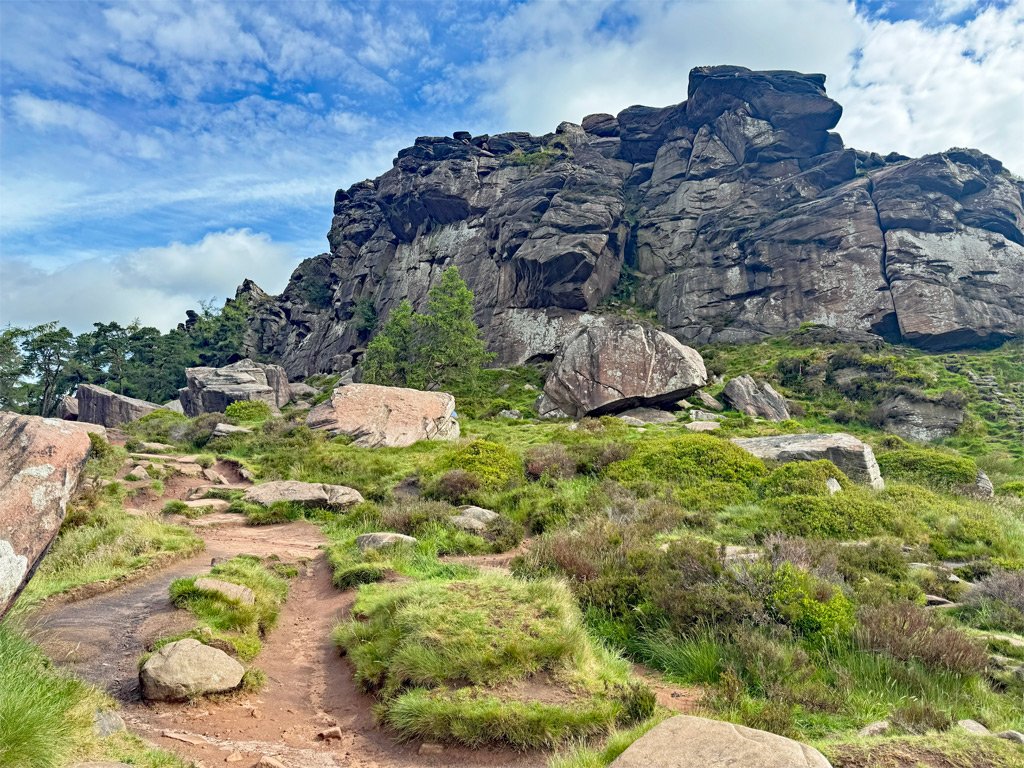
Both tiers are of similar height and equal grandeur, each containing a multitude of climbing routes. While the estate remained devoted to sporting pursuits, access was restricted and serious exploration did not begin until after the 1950s. Many of the classic routes date from this period. Featuring wild overhangs, exposed slabs and impeccable gritstone, they are widely regarded among the finest climbs in the Peak District.
At the foot of the lower tier stands a building that demands a double take. Rock Hall Cottage is a crenellated Gothic dwelling built in 1862 against a cave in the crag to serve as a gamekeeper’s residence. More than a century later, in 1978, at a time when climbing activity on the Roaches was flourishing, the cottage was purchased by Doug Moller and his wife Anne as a retreat from modern life.
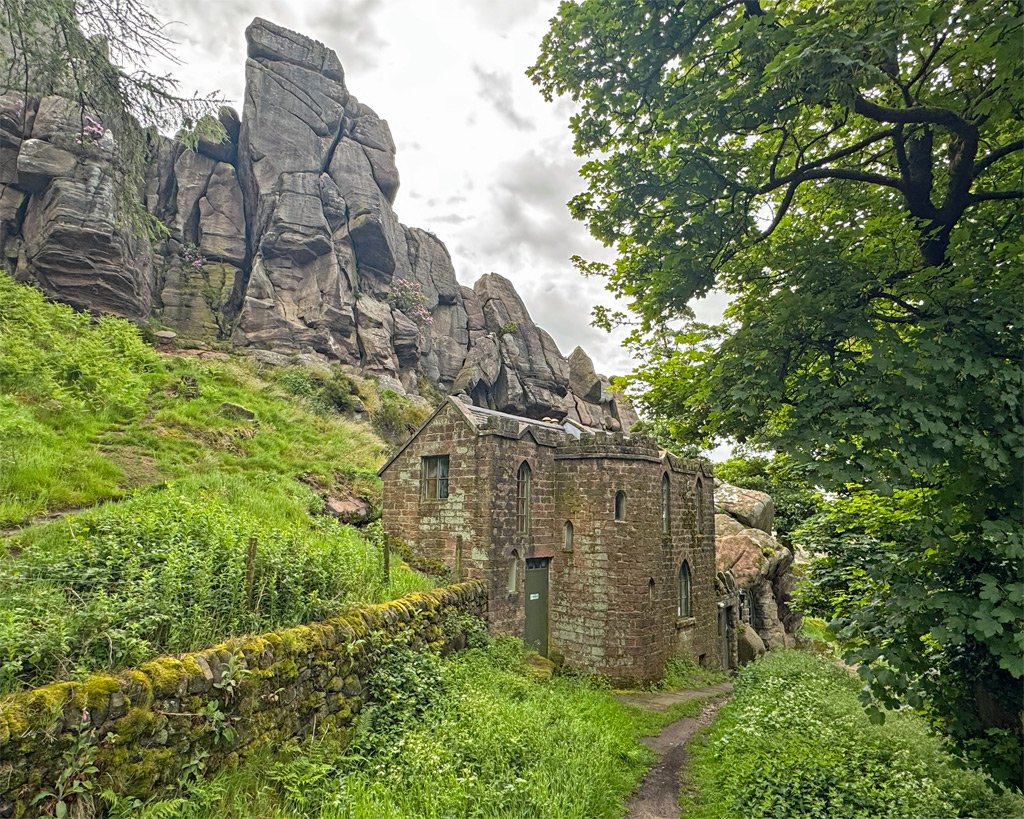
Unfortunately, Anne’s delicate health was hardly aided by the absence of such basic amenities as electricity and running water. Doug’s ambitions to renovate the property came to little, largely through lack of funds.
Further difficulties soon emerged. By this time the estate had been broken up and ownership had passed to the Peak District National Park Authority. Keen to encourage open access, the Authority viewed this private enclave as increasingly incongruous, particularly as Doug was cutting firewood in areas where they would rather he did not. Attempts to buy him out proved unsuccessful and a bitter dispute lingered for years.
With an axe slung over one shoulder and a piratical eye-patch—genuinely required—Doug could be an intimidating figure to encounter. Yet some insensitive climbers chose to bait him and even contaminate his water supply. As a regular climber at the Roaches during that period, I was fortunate to get on well with Doug, though it was distressing to witness the antagonism of those who seemed intent on provoking conflict.
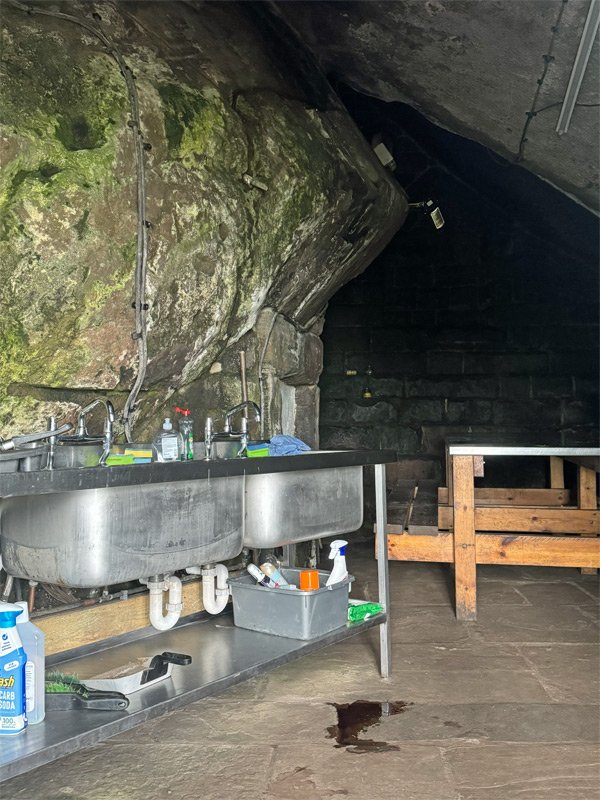
After twelve years in residence, Doug and Anne eventually accepted relocation. The cottage was leased, in 1993, to the British Mountaineering Council and renamed the Don Whillans Memorial Hut in honour of one of the pioneering climbers who helped establish the Roaches’ reputation during the 1950s. The hut accommodates twelve people in two rooms and, at the time of writing, midweek single-night stays are available from £11. Facilities have improved considerably, although the kitchen remains built against a living rock wall and a dehumidifier is required to combat the ever-present damp.
Beyond Rock Hall Cottage, a wander through the woods at the end of the lower tier leads to the stone steps connecting the two crags. It is here that our suggested scramble route climbs to the right of the upper tier. However, a path also leads beneath the cliffs, where the great overhangs can be appreciated from below. I lost a fair amount of blood jamming hands and arms into the vicious cracks of these routes, although, of course, poor technique may have had something to do with that.
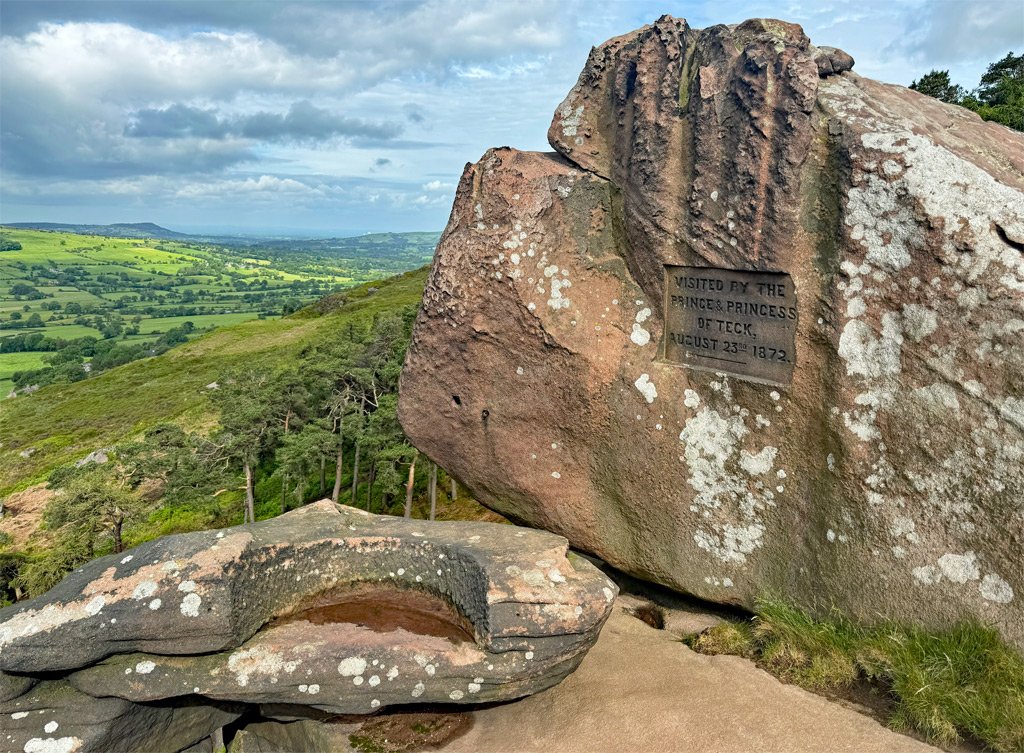
The crags were also the setting for a lavish royal visit hosted by the Brocklehurst family in 1872. The guests were the Prince and Princess of Teck. Princess Mary of Cambridge, a cousin of Queen Victoria, had reached an age at which many assumed she had been left on the shelf. Victoria, however, was determined that a suitable royal match should be found, and the Prince of Teck eventually became that suitor. Their daughter would later reign as Queen Mary, consort of King George V.
The upper tier possesses a more open aspect than the lower, although woodland returns at its northern end, where a path leads directly to the crest of the ridge. When descending this way, the top of the gully can be identified beside the remains of a low and somewhat dilapidated drystone wall.
This section was known as the Skyline area of the old Swythamley Park estate and rises to 1,657ft (505m), the highest point on the ridge. The walking is straightforward and allows uninterrupted enjoyment of the expansive views.
At around 1,540ft (470m), a pool appears unexpectedly on the very crest of the ridge. With no inflow or outflow, it relies entirely upon rainfall gathering in a natural hollow. Known as Doxey Pool, it measures almost fifty feet across and has never been known to dry up, leading to claims that it is bottomless. Modern visitors are no longer able to investigate this theory for themselves, as the pool was fenced in 2023 to combat erosion and declining water quality caused by excessive visitor pressure.
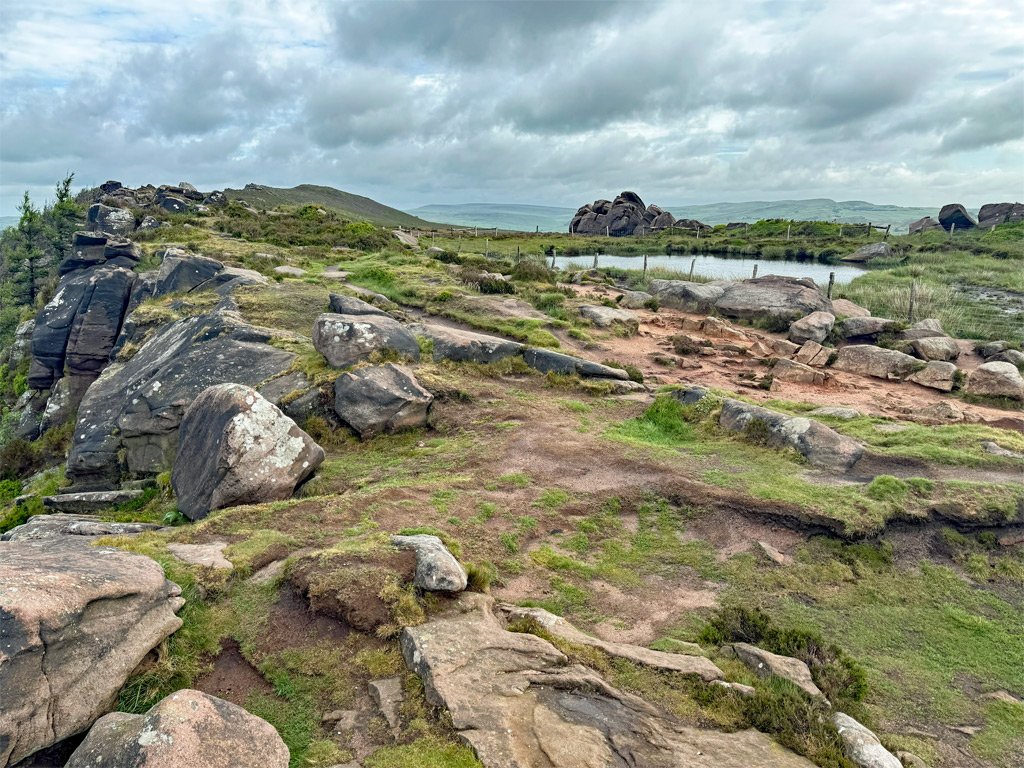
Nevertheless, Doxey Pool remains a curious feature. Even more intriguingly, it has a counterpart several miles to the east on Morridge. Known as Blake Mere—or Mermaid’s Pool to many—it too is reputedly bottomless and inhabited by another water nymph. In reality, a diver once settled the question rather quickly; the pool proved to be little more than six feet deep.
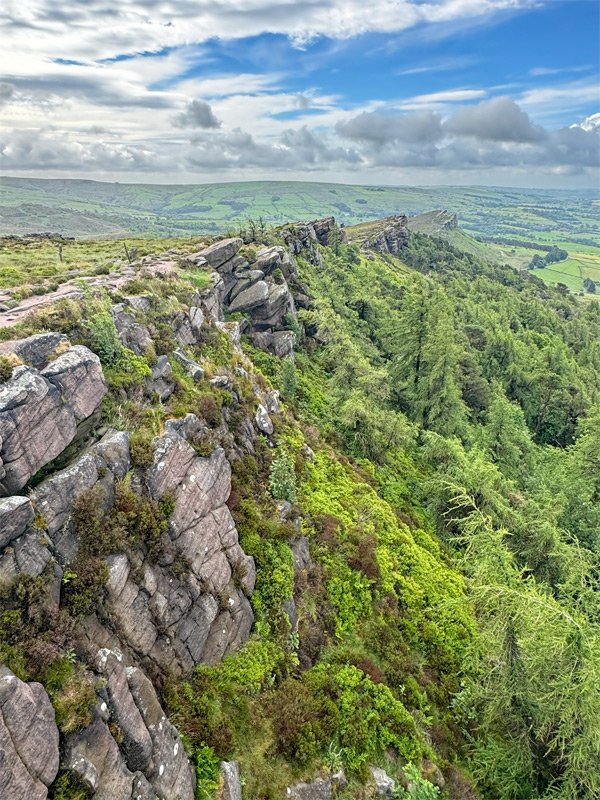
Continuing along the ridge and gazing down into the wooded valleys below, it is easy to imagine the wallabies living undisturbed among the trees. At this point there are no lower footpaths, only the narrow metalled strip of Roaches Road running beneath. Some guidebooks recommend this road as an alternative return route, but the ridge is so much more rewarding that retracing one’s steps along it hardly feels a hardship. Indeed, the scenery often appears different when viewed from the opposite direction, offering a fresh perspective on the same remarkable landscape.
These woods, and indeed much of the surrounding estate, are now managed by Staffordshire Wildlife Trust, which has held the lease from the Peak District National Park Authority since 2013. The land and its wildlife enjoy protection under a variety of conservation designations, most beginning with the reassuring prefix “Special”.
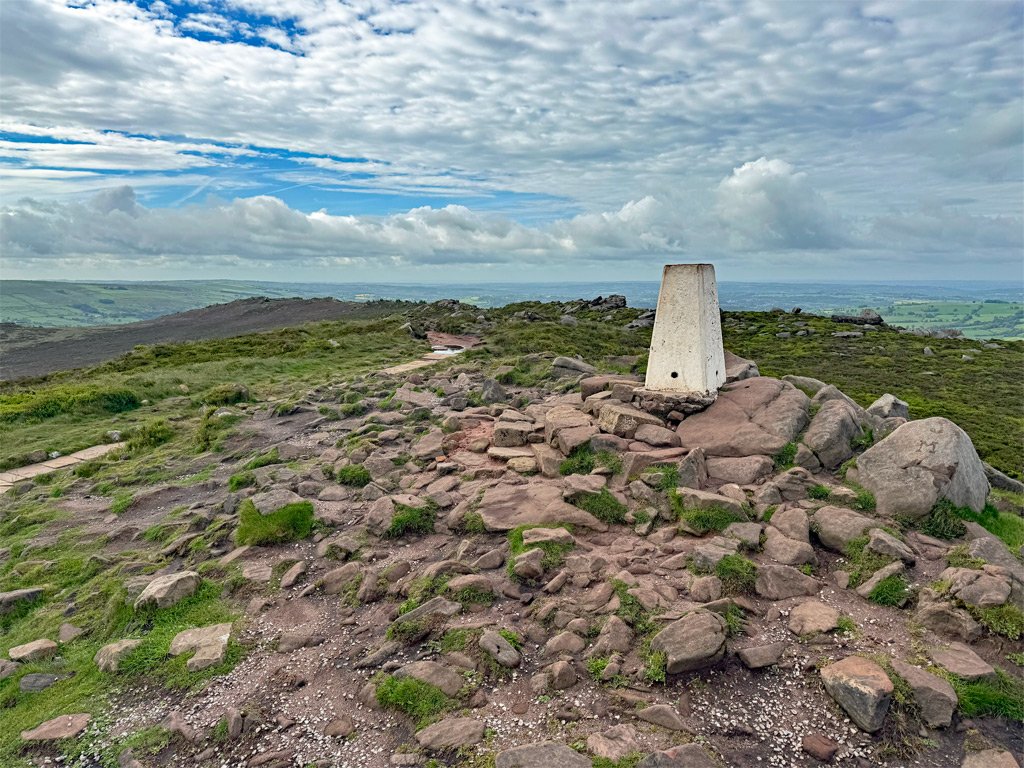
By now, the summit trig pillar has been visible for some time and is reached without effort; this is a gentle walk throughout. It hardly feels like a mountain summit, yet to the north rise hills that possess a distinctly mountainous appearance. The elegant cone of Shutlingsloe and the broader mass of Shining Tor compete for attention on the skyline. Both are worthy destinations in their own right, even if neither quite earns a place on our Worthy list.
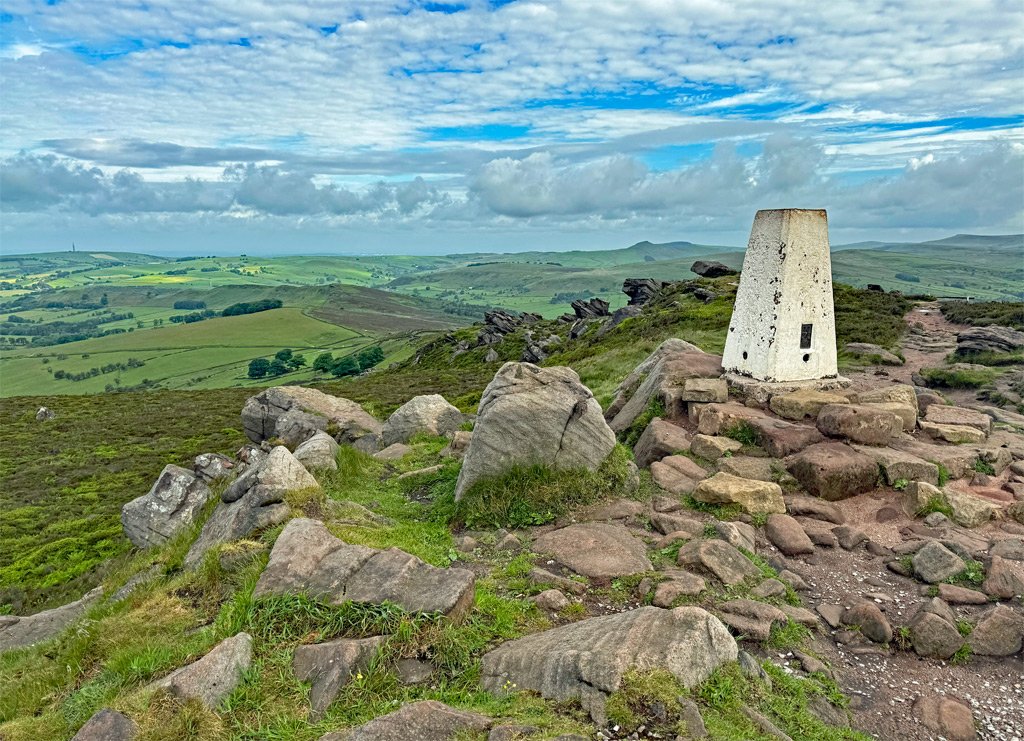
From the summit, the route descends past further examples of weathered rock sculpture to Roach End, where a minor road cuts across the ridge and separates the Roaches from Back Forest Ridge, the final stage of our traverse. Standing by the trig point, you may have questioned whether the continuation is worthwhile, as the ridge ahead appears lower, gentler and largely grassy. Persevere nevertheless. The distance is short and the walking delightful.
As the ridge unfolds, the landscape gradually assumes a more pastoral character. Sheep and cattle frequently share the route, while occasional rock outcrops punctuate the crest. To the left, the Dane Valley glitters below, and at the foot of the hills stands Swythamley Hall, once the principal residence of the Brocklehurst estate. The family’s wealth was founded upon the silk industry that flourished in the not to distant mills.
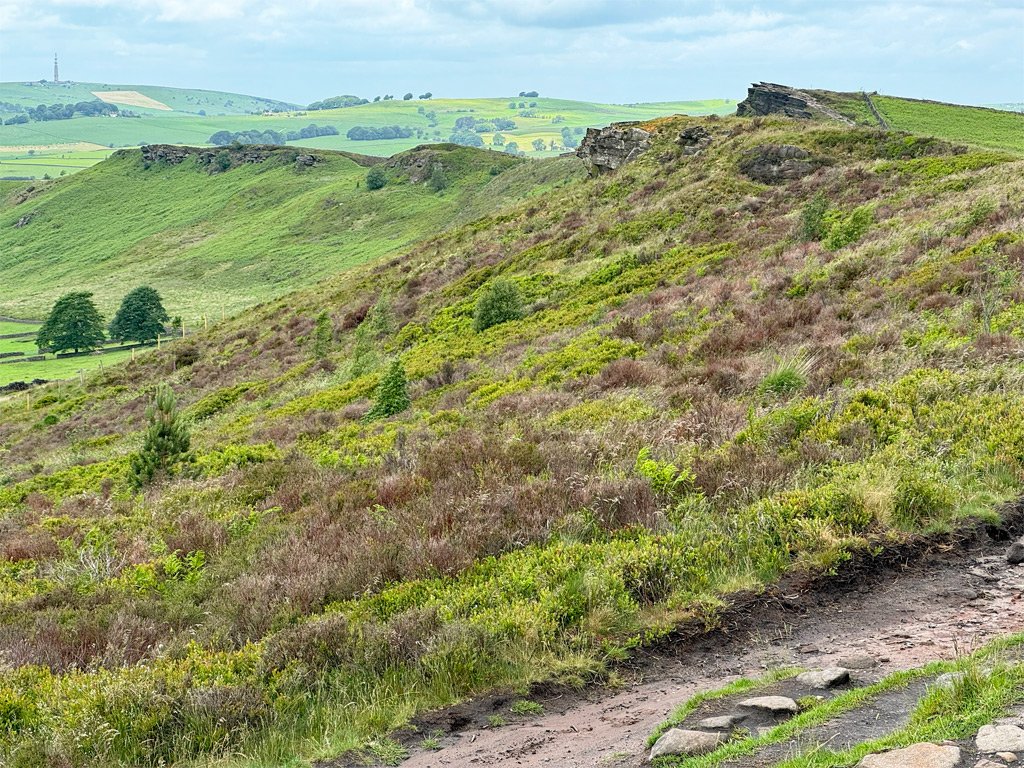
Following the death of Philip Brocklehurst, the estate passed to a great-nephew who chose to sell it. While Doug Moller was acquiring Rock Hall Cottage at auction, the hall itself entered a rather different chapter of its history, serving for a decade as a college devoted to Transcendental Meditation. Subsequently, the building was converted into private residences. Much of the surrounding land was purchased for sheep farming before being acquired by the Peak District National Park Authority in 1980, and it remains in public ownership today.
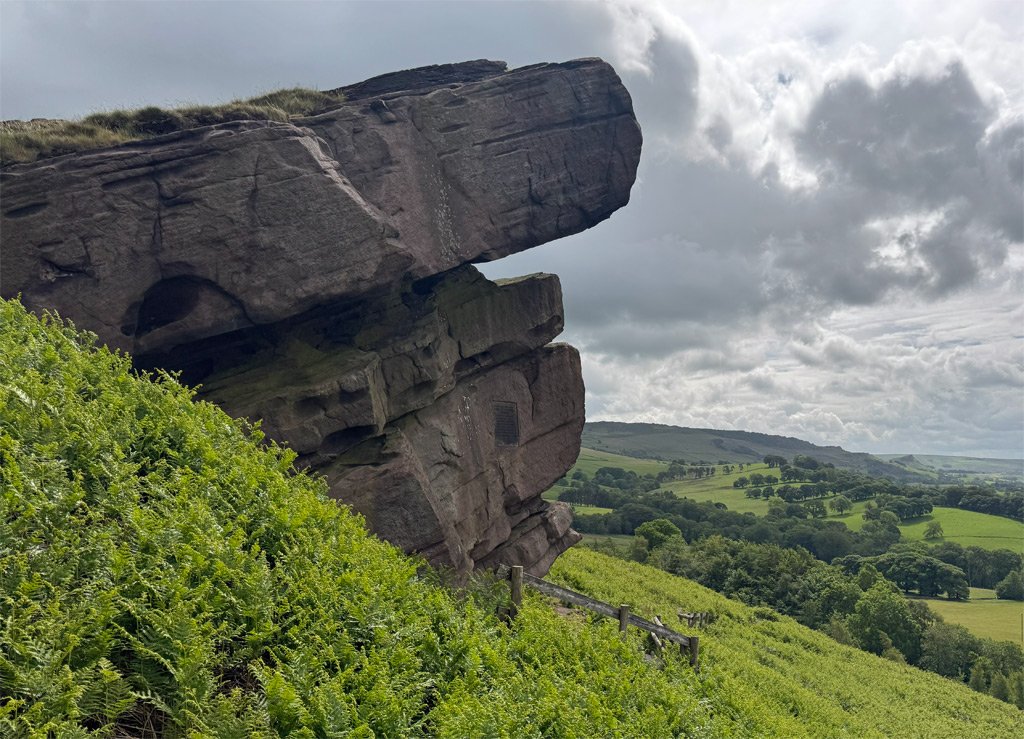
Our destination is Hanging Stone. Barely visible for much of the walk, it reveals itself at the last moment as a surprisingly large and striking feature. During the eighteenth century, the antiquarian vicar of Leek argued that the regularity of its form precluded a natural origin and suggested that it may once have served as a sacrificial altar. That seems doubtful, although the stone is certainly an intriguing curiosity.
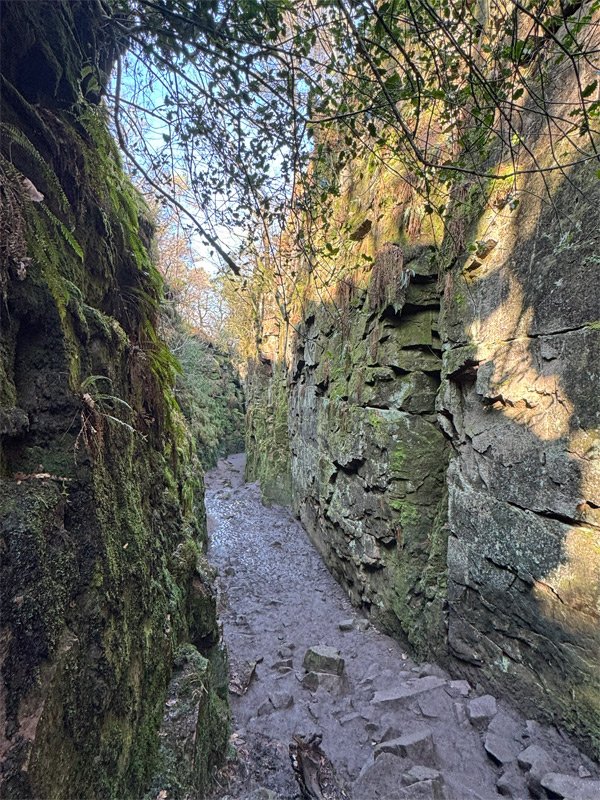
For those returning to the Roaches, a worthwhile diversion can be made via Lud’s Church, an extraordinary chasm hidden within the Back Forest. Today it enjoys considerable fame, thanks in no small part to social media. Beyond the ravine, continue through the woods before taking a path on the right that climbs back to the ridge.
From there, return along the crest with some familiarity, although the rock architecture and the atmosphere all seem subtly different when approached from the opposite direction. For a walk of modest length and gentle gradients, it delivers an astonishing richness of landscape, history and character. The outing may not provide the highest of thrills and, as such was considered for categorisation on the Minor Worthy list, however, due to its separation from the other Worthies of the Peak District, and its representation as the finest walk on the Staffordshire Moorlands, it was decided on balance to award the Roaches Skyline full Worthy status.
Worthy Rating: 66
Aesthetic – 21
Complexity – 10
Views – 14
Route Satisfaction – 14
Special Qualities – 7