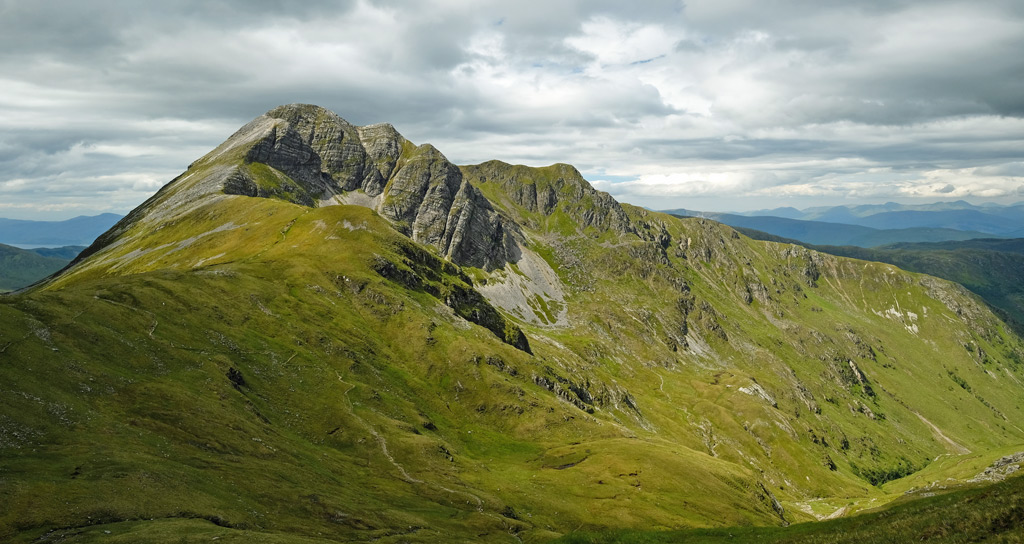
Stob Bàn cuts a fine figure. Both on the map and on the ground, its soaring conical form, capped by a shattered crust of white quartzite, captures attention and ignites aspiration.
For those embarking on the magnificent traverse of the complete Mamore range, Stob Bàn is of little more consequence than comprising the second Munro of the ten to be climbed, although it deserves better, being a standalone mountain worthy of closer inspection.
Winter mountaineers recognise this, as Stob Bàn is the only one of the Mamores to offer a wide range of snow and ice climbing, predominantly on its impressive north-east face.
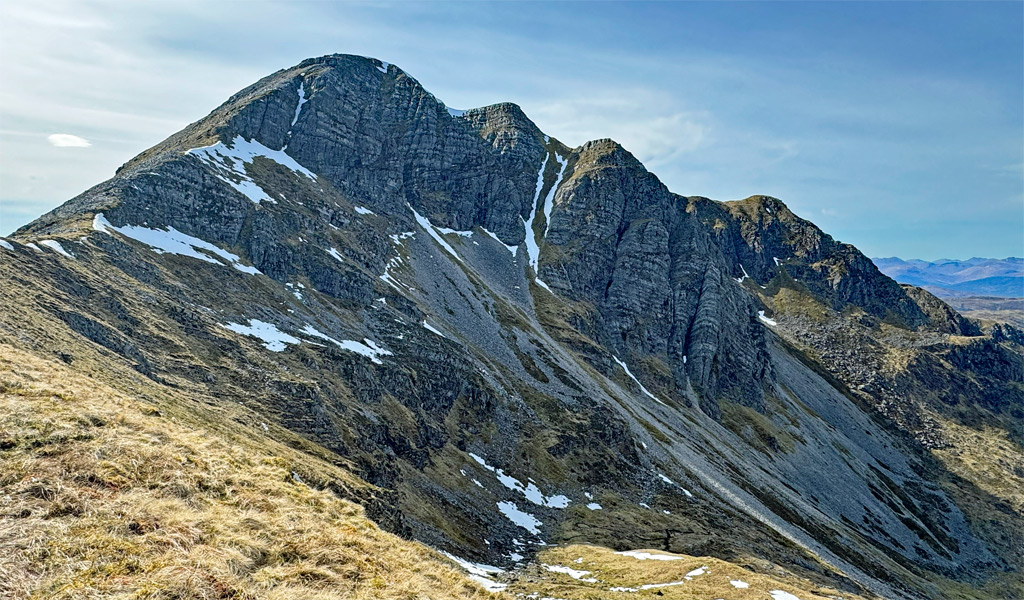
The name translates as “white” or “light-coloured peak”, not as a reference to its winter supremacy, but to is quartzite tonsure, although the grave accent elongates the ‘a’ for pronunciation into Stob Bahn, which makes it sound pleasingly alpine, something rather fitting, for this is a genuine peak, which stands out from its rounded neighbour Mullach nan Coirean, with which it is often combined on a horseshoe walk.
The mountain attains an altitude of 3280ft, just an average number in the Munro stakes, however, in metres this equates to 999.7m, just shy of the 1,000m mark. Nevertheless, as a consolation for this tiny shortfall in elevation, the mountain is the tallest of the sub-1,000m metre Munros – there are three at 999m.
Fortunately for Stob Bàn, one-thousand-metre peak challenges have never really become a recognised thing, although all such mountains in Scotland (with a one-hundred-metre prominence) are actually designated as “Archies”. This collective was established in 2015 for a fundraising challenge on behalf of the Archies children’s charity based in Aberdeen, when all one hundred and thirty Archies were climbed over 15 days as a relay event.
It is surprising that there aren’t many more Stob Bàns in the Highlands, with just one other, itself not too far away in the Grey Corries, a range that is almost entirely composed of Stobs. Stob Bàn (Mamores) is the taller of the two, although Stob Bàn (Grey Corries) is favoured with the thrill of remoteness.
The map above can be zoomed in and out to change the scale
Our Stob Bàn is invariably ascended from Glen Nevis. Kinlochleven is an alternative starting point, utilising the Old Military Road (the route of the West Highland Way), although once this is left, the ascent is steep and there are no continuous paths. For this reason, approaches from the south are rarely employed.
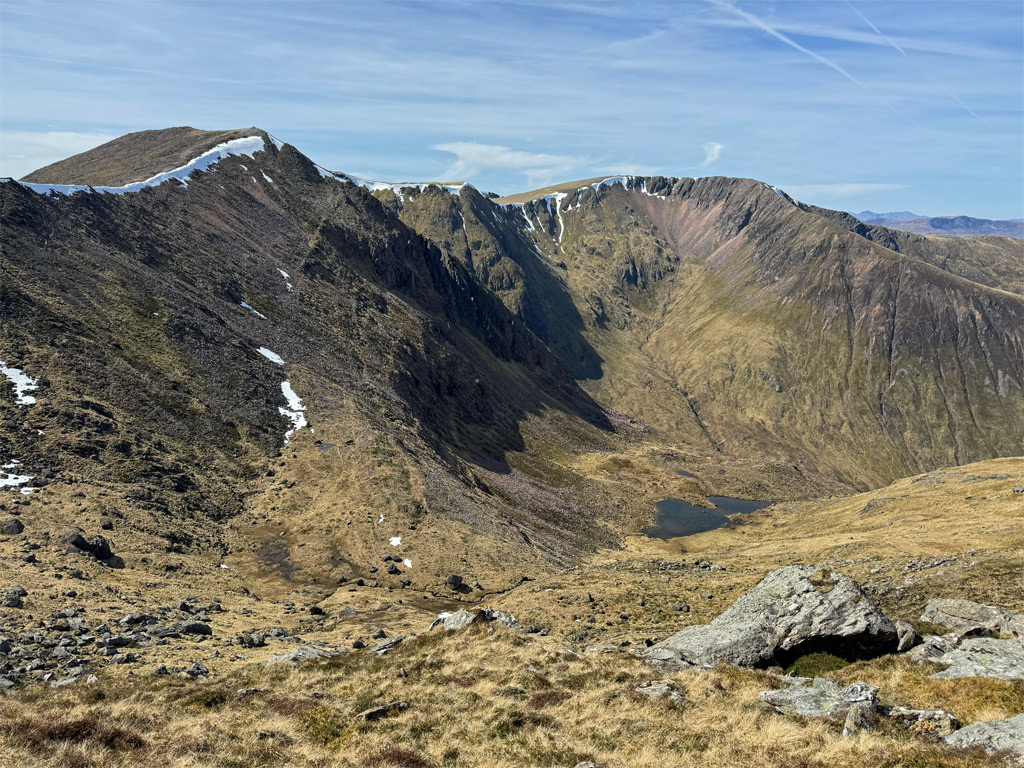
Most often Stob Bàn is linked with Mullach nan Coirean (3082ft, 939m), to form a very pleasant round of the two most easterly Munros in the range. Usually Stob Bàn is ascended first, leaving Achriabhan on what feels like a nature trail climbing alongside the Allt Coire a’ Mhusgain. As height is gained the surroundings become progressively more savage. The path quits the river, zig-zagging up into Coire a’ Mhusgain, above which looms the mountain’s finest feature, the north-east face, a mass of broken, imposing rock some 1000ft high.
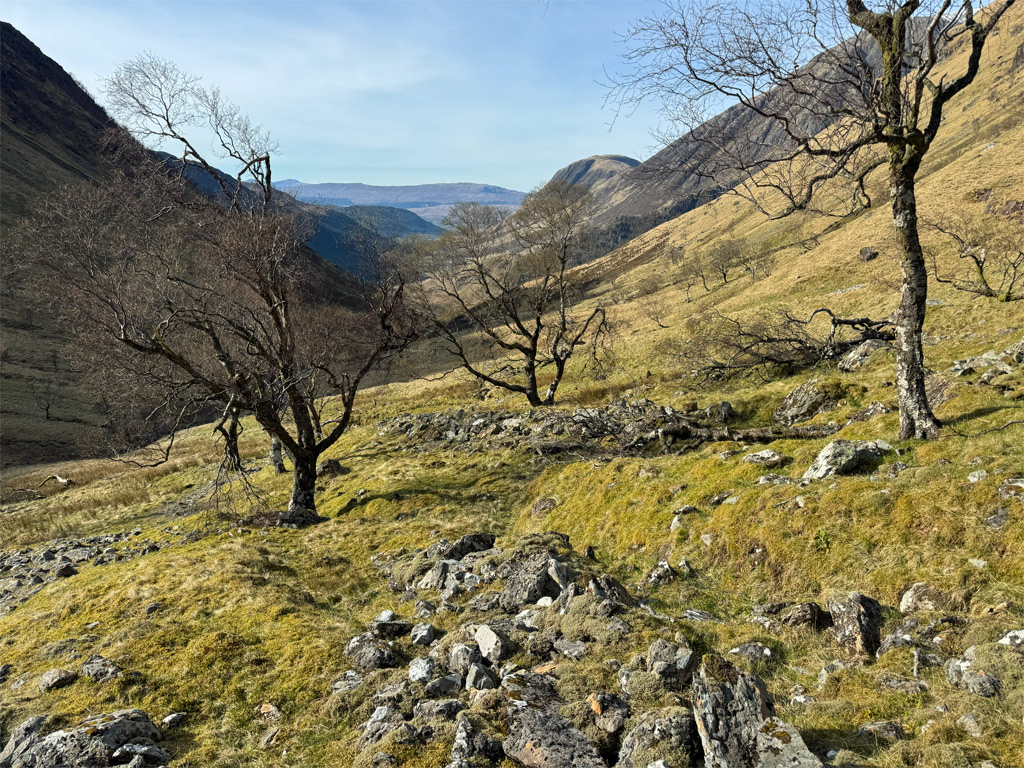
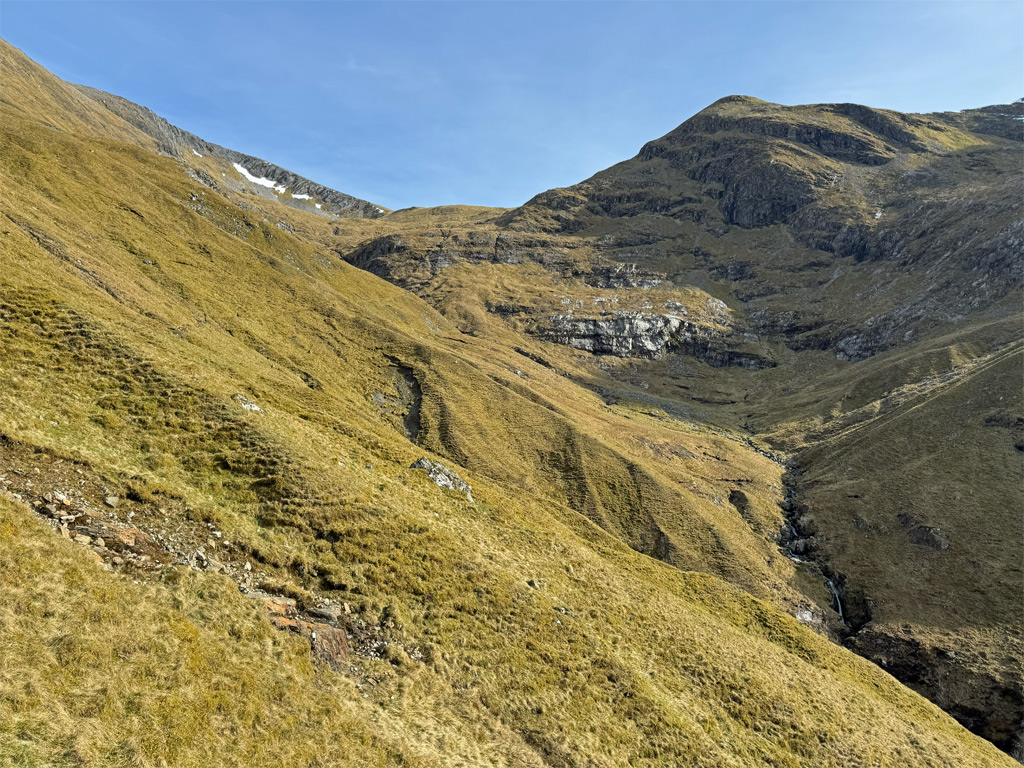
There may be something lost in the translation of Coire a’ Mhusgain, which we are led to believe means Corrie of the Shellfish. While pondering this, our path sweeps around the corrie to attain the col between Stob Bàn and Sgùrr an Iubhair – the latter at 1001m is marginally higher, and was formerly the eleventh Mamore Munro, until being demoted in 1997 for lack of prominence. Therefore, we turn our sights to the east ridge of Stob Bàn, whose appearance may raise the heartbeat momentarily, even before the ascent commences. The climb is steep and suffers from some scree in places, although it is straightforward and leads without issue to the summit cairn, perched close to the abrupt abyss of the north-east face.
The location of the cairn is crucial in winter, as the edge can become heavily corniced, disguising the proximity of the drop, so do not stray east of the cairn, especially in mist.
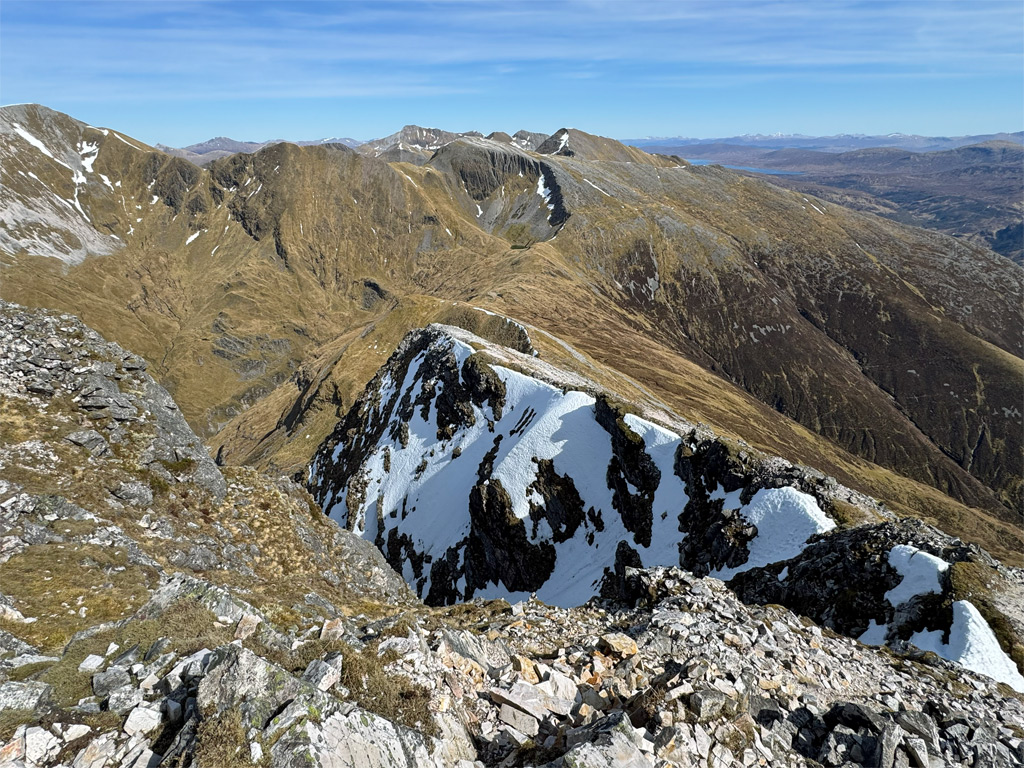
In such conditions, for those descending the east ridge, careful navigation is required to locate it; the first few steps are on the south-west ridge prior to turning east. At this precise location, spare a thought for the late Martin Moran, a prolific winter mountaineer who, in 1985, was the first person to climb all the Munros in a single winter season. Martin was attempting the full traverse of the Mamores on a particularly wild day, and when heading for the east ridge in descent, wrote… “I withdrew my nose into my hood as the stinging hail commenced, and ploughed blindly downwards. About 130m lower, I sensed the wind meeting me head-on… then came the painful realisation…that I was some way down the south-west ridge. There was no route round, so biting my lip, I could only climb back up”. Martin’s book The Munros in Winter is highly recommended.
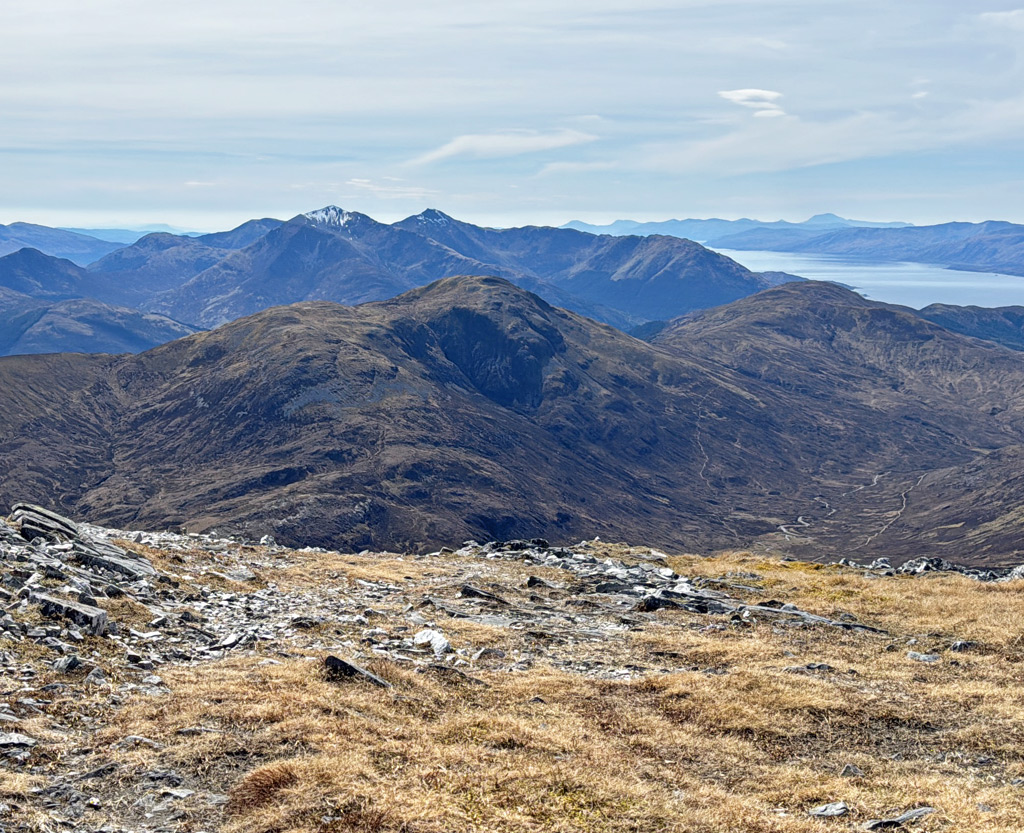
The summit of Stob Bàn is the meeting point of three ridges, The east ridge, which we have just ascended; the south-west ridge, which provides a steep, but rapid descent to join the West Highland Way; and the north ridge, which bifurcates at a prominent subsidiary summit, marked by a spot height of 912m on the map. Here the short, west ridge links to Mullach nan Coirean, accompanied by a dramatic change in geology.
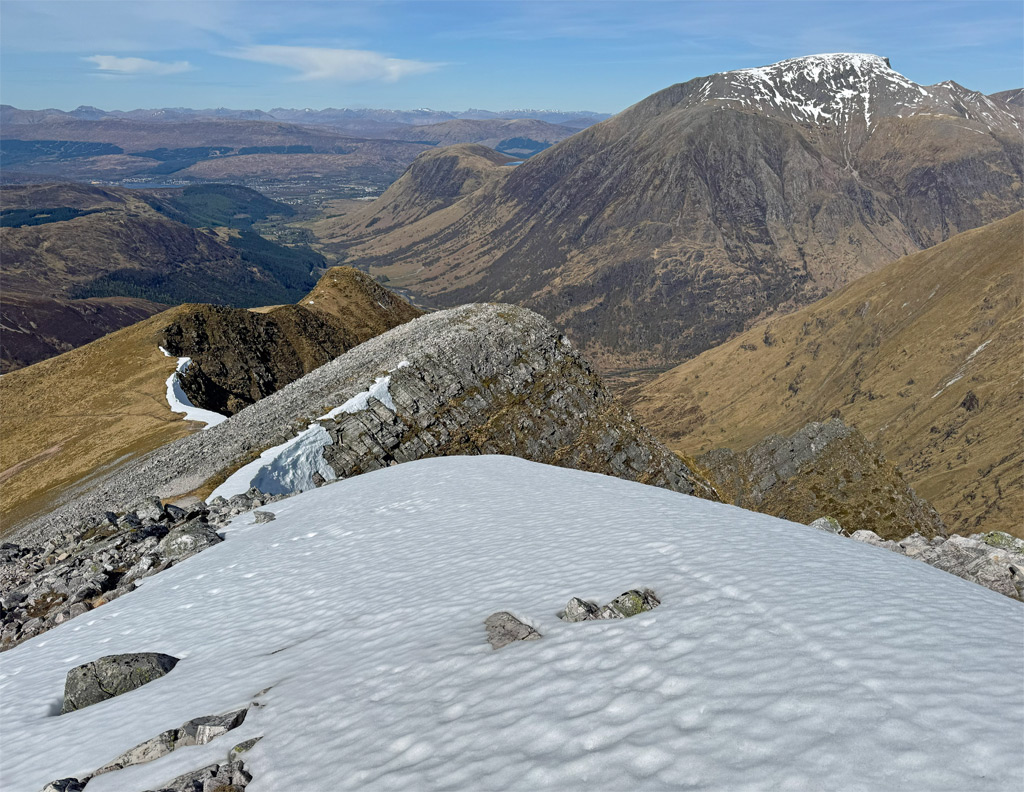
This major shift occurs at the col marked as point 846m on the map. The topography becomes more gentle, and gone are the quartzite screes to be replaced by pink granite. Stob Bàn is an important site in Scottish geology, recognised by the government-produced Geological Conservation Review as a significant example of Dalradian geology, the underlying schist dating back five hundred million years. Don’t get too excited, as this is not an isolated occurrence – there are another eighty-five similarly designated sites in the Highlands. However, what distinguishes Stob Bàn is a feature called the Stob Bàn Synform. This exhibits a sharp fold around an axis, with bands of the same rocks appearing on either side. Here, the schists have folded with slates and limestone. The eagle-eyed and/or the informed may notice this while climbing the upper part of the north ridge, across which the synform runs. Others may be sufficiently occupied by watching where they are putting their feet!
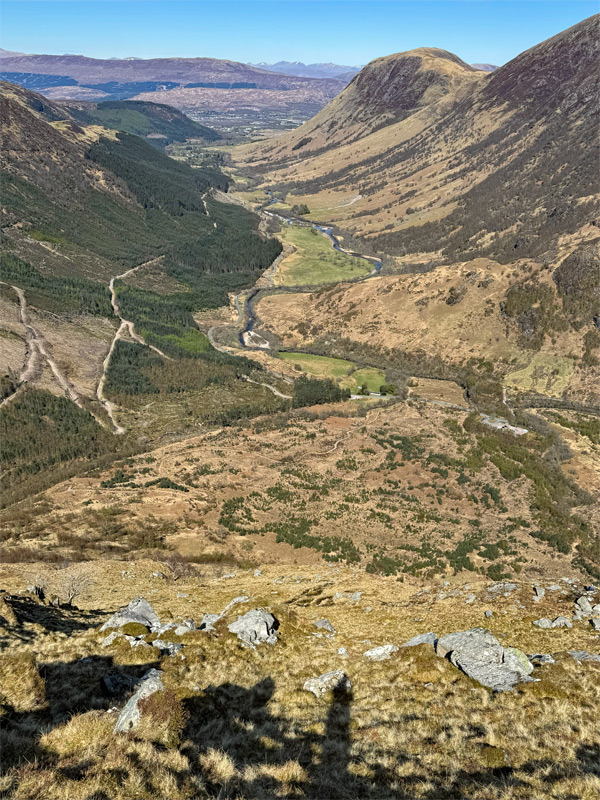
And so, to the north ridge, the most direct and exciting ascent of the mountain, although one that is rarely documented. And when it is, nearly all reports involve a winter ascent. Nonetheless, as you can read here, the north ridge makes an excellent summer route.
From Achriabhan, follow an ATV track up the open hillside (not into the forest – that goes to Mullach nan Coirean), and, just before the track runs out, having gained a handy few hundred feet in altitude, a minor path heads off steeply up to the left. Sadly, this is not up to the stalker-path standards of many others found on the Mamores, although it does make some attempts at zig-zagging rather than going for the modern, gung-ho, direttissima method.
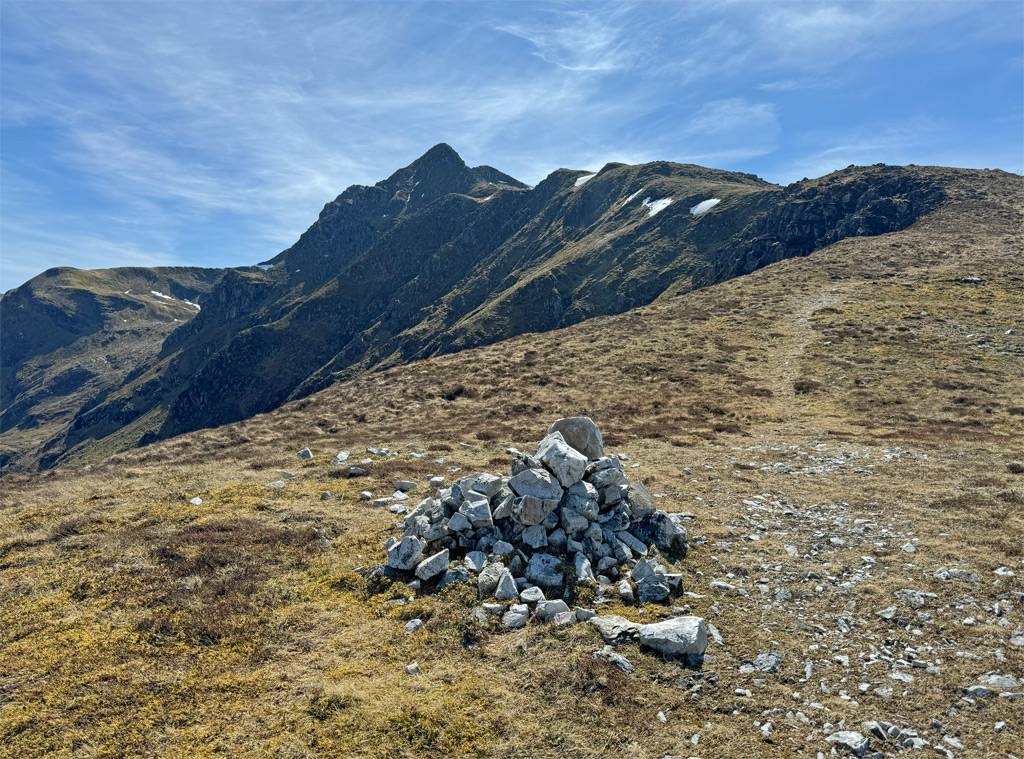
The path cleverly negotiates the craggy nose of Sròn Dearg, then, at 700m, suddenly relents into an amiable stroll, with stunning views of the upper ridge. Once this is attained, the scrambling section is actually very short, which may perhaps disappoint those looking for winter sport, for which this has become a highly regarded Grade I route. It’s a long way to come for a brief section of axe work. For the summer aspirant, this is what might be graded a 0.5 scramble. What rock that does need to be negotiated is well-supplied with handholds and there is little exposure. And it’s delightful.
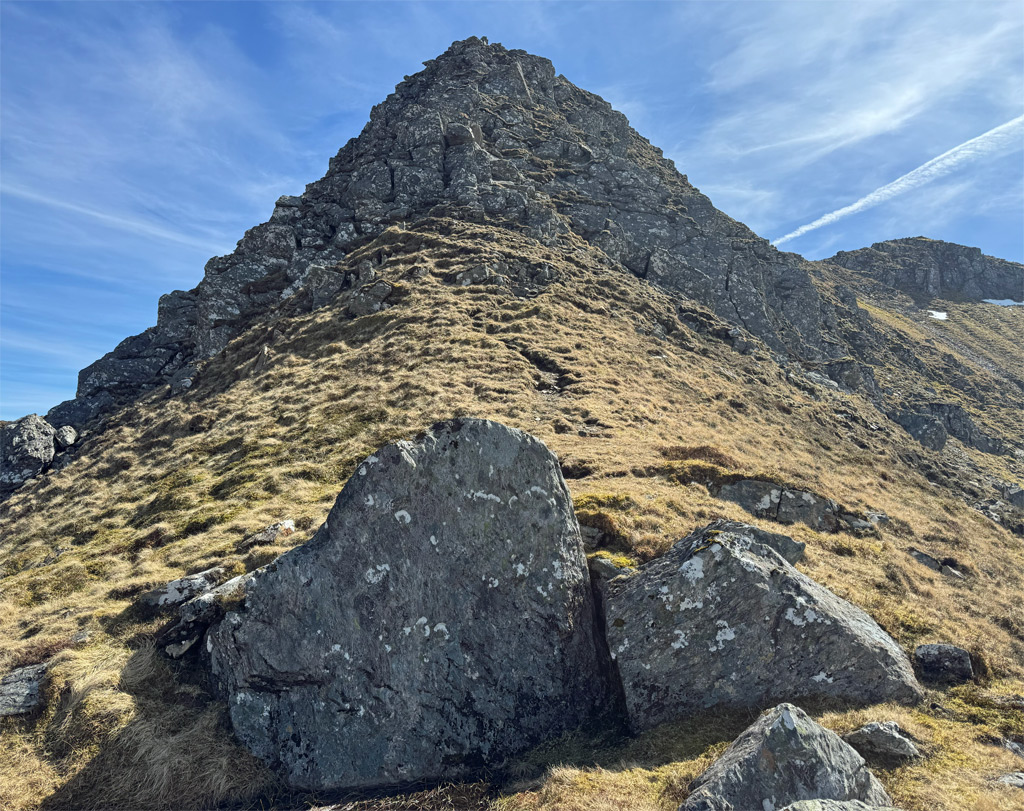
We top out on the fine lower summit, which hopefully you knew all along was a false summit. However, from here, the final cone of Stob Bàn looks riddled with quartzite scree, appealing eye-candy from afar, but maybe not so appealing to climb. However, the ascent turns out to be perfectly amenable, and the views along the way are superb.
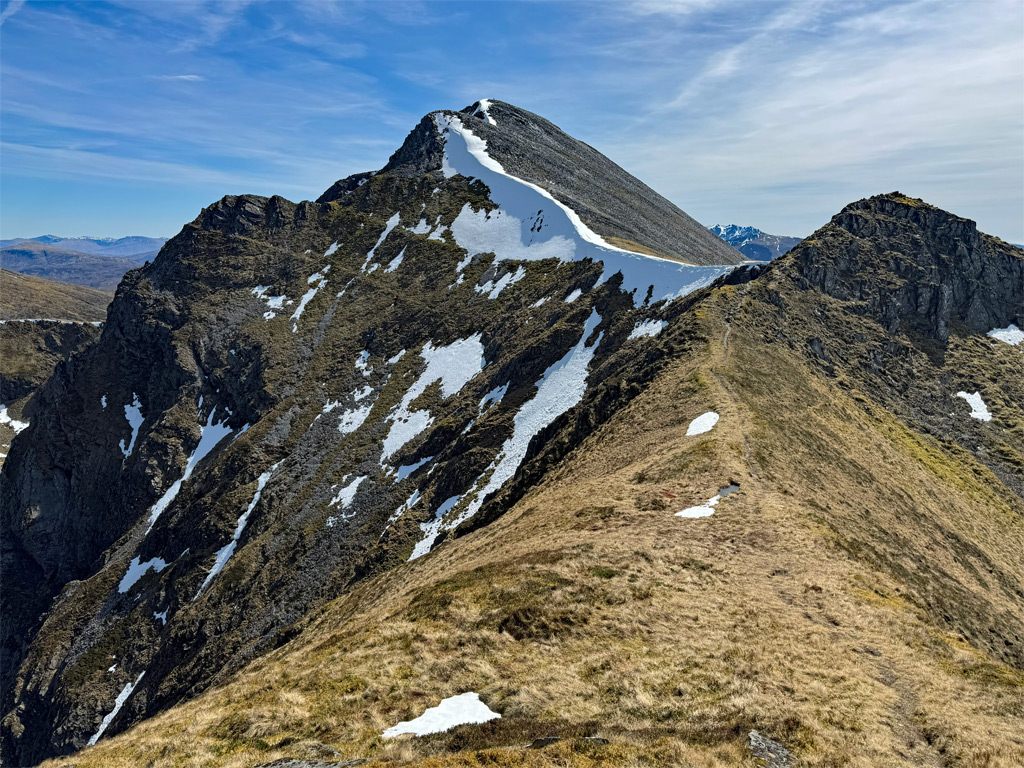
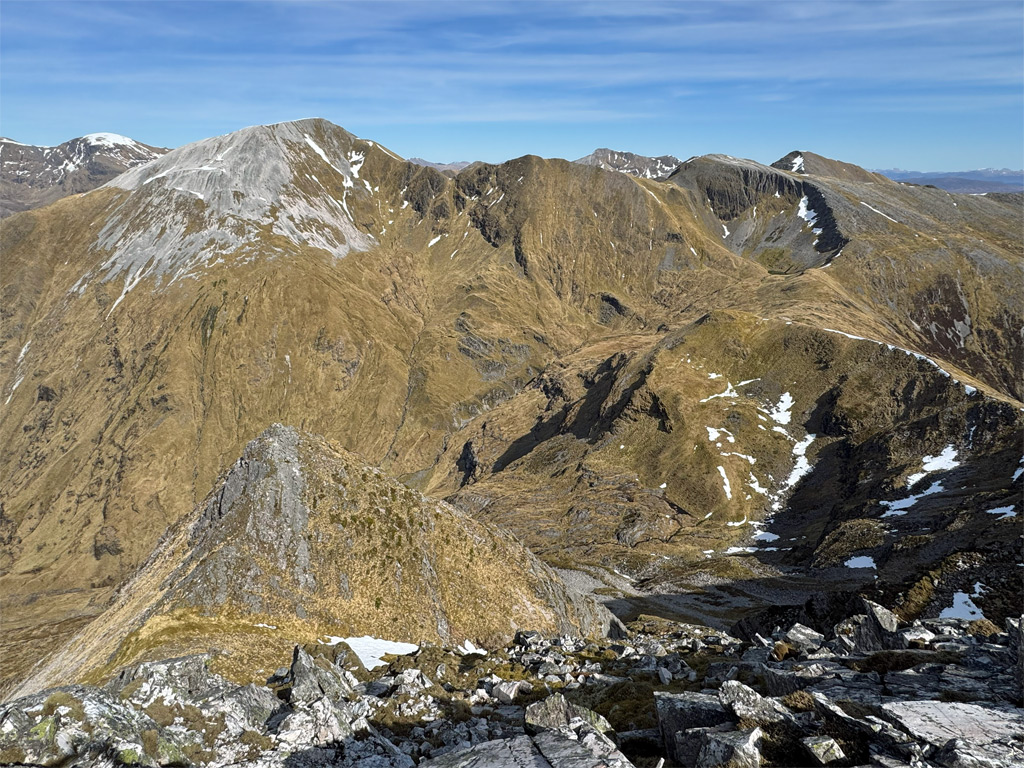
Whichever route of ascent has been chosen, the summit provides a fitting climax. The vista across to the continuing body of the Mamore Ridge is breathtaking, although for those traversing that ridge and looking back, Stob Bàn is equally majestic; individually striking yet an essential protagonist of the range.
For Worthy purposes, our assessment of the Mamores has been divided into three areas, Binnein Mor; Stob Bàn; and the central range, renowned for the Ring of Steall circuit. Each has its own feature on our website.
Feature photo at top of page: CC License ShareAlike 2.0 Generic. Image gratefully cropped from: https://www.flickr.com/photos/105307156@N06/31023337891/
Worthy Rating: 76
Aesthetic – 24
Complexity – 12
Views – 18
Route Satisfaction – 15
Special Qualities – 7